
How Portable EV Charging Is Transforming India’s Electric Mobility
India’s EV growth is outpacing its fixed charging network. While major cities are adding public chargers, most towns, residential societies,…
Read More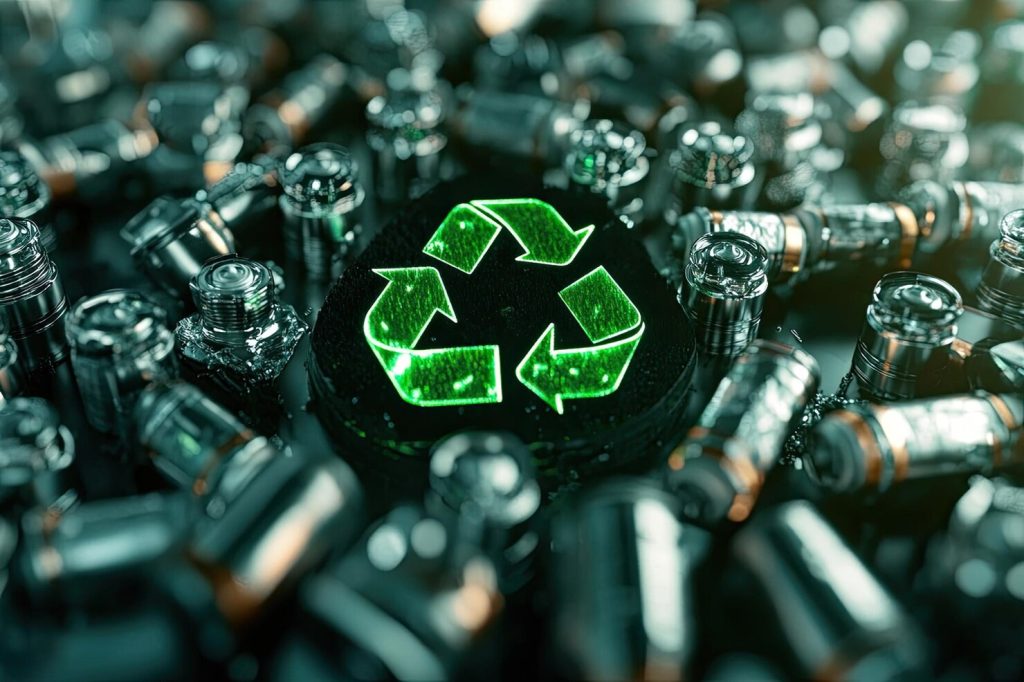
As India accelerates its transition to electric mobility and renewable energy, battery solutions are playing a vital role across industries. However, their rapid adoption also creates a growing need for responsible and scalable battery waste management.
To address this, the Government of India introduced the Battery Waste Management Rules (BWMH), 2022, establishing a regulatory framework for battery collection, recycling, traceability and end-of-life management, with a strong focus on Extended Producer Responsibility (EPR).
This article explains how battery recycling supports BWMH 2022 compliance, outlines the key recycling processes and technologies, and highlights how organisations such as Elvon Solutions enable compliant and future-ready battery ecosystems.
Battery recycling is the process of collecting, sorting and treating used batteries such as lithium-ion, lead-acid and nickel-cadmium to recover valuable materials like lithium, cobalt, nickel and copper. It reduces landfill waste, prevents environmental pollution and supports a sustainable supply of raw materials for new battery production.
India’s Battery Waste Management Rules, 2022 provide a regulatory framework to ensure environmentally sound handling, collection, recycling and disposal of batteries across the entire lifecycle from production to post-use management. These rules replaced earlier guidelines and refined key responsibilities for stakeholders, especially battery manufacturers, importers, producers, and recyclers.
The 2022 regulations emphasize Extended Producer Responsibility (EPR), mandatory registration, traceability of battery waste and target-based battery recycling goals. Under BWMH 2022, producers are expected to ensure that batteries sold in India are collected and recycled in a scientifically sound manner at the end of their life.
Traditional linear economic models (make → use → dispose) are destructive and unsustainable. Battery recycling flips this model by transforming end-of-life batteries into valuable raw materials such as lithium, cobalt, nickel and copper that can be reused in new batteries and industrial applications. This creates a circular economy loop where waste becomes resource.
Improper battery disposal can lead to soil and water contamination due to heavy metals and toxic compounds. Responsible recycling prevents these hazardous elements from entering the environment. Furthermore, recycling, especially hydrometallurgical recovery methods, consumes less energy and reduces greenhouse gas emissions relative to primary mining.
Under BWMH 2022, producers must ensure battery waste is collected and recycled efficiently. Fulfilling EPR is more than a legal obligation; it’s a strategic differentiator that demonstrates environmental accountability and builds brand trust.
Battery recycling involves several technical processes designed to safely break down batteries and recover materials.
This traditional method uses high heat to melt batteries and extract metals. It is effective for recovering metals like copper and nickel, but can lose some lithium and other elements in the process.
Hydrometallurgy is currently the dominant and more efficient method for recovering materials such as lithium, cobalt, and nickel. It uses chemical leaching to dissolve and separate metals from battery black mass. Approximately 80% of recycling capacity in India employs hydrometallurgical techniques due to higher recovery rates and lower emissions compared to pyrometallurgy.
Batteries are often shredded or crushed in controlled environments to create a black mass — a mix of cathode/anode materials and metals, which is then further processed for material recovery.
BWMH 2022 covers multiple battery types, each with its recycling pathway and regulatory requirements:
Lithium-ion (Li-ion), Nickel-Cadmium (NiCd), Nickel-Metal Hydride (NiMH), widely used in EVs, consumer electronics, energy storage systems and industrial applications.
Alkaline and zinc-carbon batteries.
Commonly used in automotive and backup power systems; these have a well-established recycling ecosystem.
By incorporating recycling readiness from design to end-of-life management, companies can ensure compliance across this spectrum of battery chemistries.
While regulations focus on large-scale compliance, safe recycling starts with everyone:
Individuals and organizations should return used batteries to authorized recycling or collection centres. Some retailers and municipal hazardous waste depots accept household batteries.
High-voltage batteries (e.g., EV and large Li-ion packs) should have their terminals taped to prevent short circuits during transport.
Ensure batteries are processed by certified, compliant recyclers who follow safe recovery methods.
Connect with our experts to understand BWMH 2022 requirements
Elvon Solutions, known for its integrated renewable energy and battery storage technology offerings, brings sustainability to the forefront through advanced battery solutions and compliance readiness.
Elvon’s operations are aligned with global Environmental, Social, and Governance (ESG) principles and UN Sustainable Development Goals (SDGs), with emphasis on clean energy adoption and responsible resource management.
Elvon integrates the latest lithium-ion and lithium-iron phosphate (LiFePO4) technologies into its products, enhancing safety, cycle life and resource efficiency. High safety standards such as Battery Management Systems (BMS) ensure long life and reliable performance, ultimately leading to reduced waste generation.
Advanced battery recycling technologies are a key component of Elvon’s sustainability strategy. By minimizing waste and maximizing reusability, Elvon ensures that end-of-life battery materials are not lost but reintegrated into new solutions. This approach strengthens compliance with BWMH 2022 requirements and enhances corporate responsibility.
India is projected to generate millions of tonnes of spent lithium-ion and other battery waste by 2030. Formal recycling infrastructures are scaling up, but the need for compliant, scientifically sound recycling is more urgent than ever.
Companies that embrace recycling not only fulfil regulatory responsibilities but become frontrunners in sustainability and resource efficiency — which is a key competitive advantage in India’s evolving energy landscape.
The battery recycling sector in India is expected to witness exponential growth as EV adoption accelerates, renewable energy storage expands, and regulatory frameworks become more stringent. Forward-thinking organizations that invest in recycling infrastructure and compliance today will lead the sustainable energy transition tomorrow.
Battery recycling is a critical enabler of India’s Battery Waste Management Rules (BWMH), 2022 and a foundational pillar for building a sustainable, circular battery ecosystem. By enabling safe collection, traceable processing and high-value material recovery, recycling directly supports EPR compliance while reducing environmental risks and dependence on primary raw material extraction.
As battery adoption accelerates across electric mobility, renewable energy and industrial applications, organisations must move beyond basic regulatory adherence and embed recycling and circularity into their operational strategies. Through technology-driven solutions, ESG-aligned practices and a strong focus on resource efficiency, Elvon Solutions demonstrates how businesses can meet BWMH 2022 requirements while contributing meaningfully to India’s net-zero ambitions and long-term energy resilience.
Join us in building India’s clean energy future
India’s EV growth is outpacing its fixed charging network. While major cities are adding public chargers, most towns, residential societies,…
Read More
From portable electronics to electric vehicles and solar energy storage, rechargeable batteries are at the core of today’s innovation. Two…
Read More
India’s electrification journey is impressive, but many rural areas still struggle with unreliable and costly power. Dependence on diesel or…
Read More